


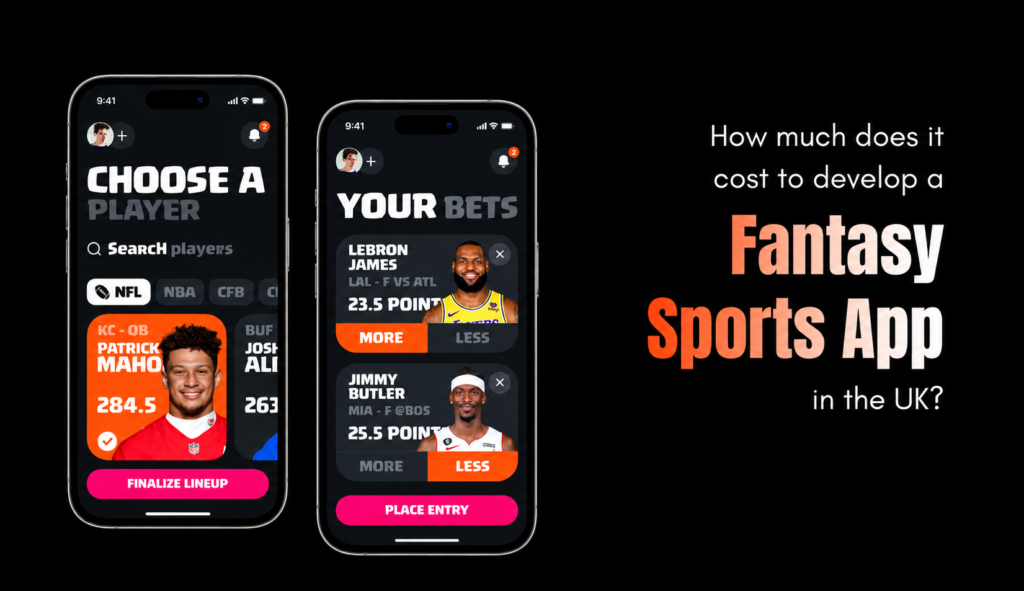
The fantasy sports application is now an important aspect of the digital sports economy as well. It allows the user to select virtual teams based on the performance of real players, earning points through the process.
However, developing a fantasy sports app for the UK is not simply a matter of creating an attractive mobile interface. The final budget depends on the app’s business model, live-data requirements, security standards, number of sports, payment functionality and—most importantly—whether users can enter paid contests and win cash prizes. A free-to-play Fantasy Premier League-style product has a very different cost and risk profile from a regulated daily fantasy sports platform.
Start With the Business Model
The most important budget decision comes before any code is written: deciding whether the app is free-to-play or real-money.
A free-to-play fantasy app might earn revenue through advertising, sponsorships, premium subscriptions, affiliate links or branded competitions. Users create teams and compete for status, digital rewards or non-cash prizes. This model is usually faster and cheaper to launch because it avoids many of the complexities associated with gambling operations.
A real-money daily fantasy sports app, in contrast, may charge entry fees and distribute cash prizes. In Great Britain, businesses providing facilities for remote gambling to consumers need a licence from the UK Gambling Commission. Remote gambling includes activity conducted through the internet and mobile apps. This changes the project from a typical sports application into a compliance-heavy financial and gaming platform.
Typical Development Cost Ranges
The following ranges are planning estimates rather than fixed prices. The actual quote will depend on the development partner, design quality, integrations and the scope agreed before work begins.
| App type | Likely development budget | Typical scope |
| Basic free fantasy MVP | £25,000–£50,000 | One sport, user accounts, team selection, scoring, leagues and an admin panel |
| Polished free-to-play platform | £50,000–£100,000 | Native or cross-platform apps, push notifications, richer social features, live-data integration and analytics |
| Multi-sport fantasy platform | £80,000–£150,000+ | Several sports, scalable backend, advanced ranking, content tools and more complex competition formats |
| Real-money fantasy sports app | £100,000–£250,000+ | Wallets, deposits and withdrawals, identity checks, fraud controls, compliance workflows and live contest management |
These categories overlap because functionality, rather than the app label, determines the real cost. For example, a football-only app may still become expensive if it requires second-by-second live scoring, extensive player statistics, high traffic capacity and personalized recommendations.
Where the Budget Goes
A fantasy sports app has several major cost centres. Understanding them helps prevent the common mistake of budgeting only for the visible mobile screens.
Product discovery and planning usually costs between £3,000 and £10,000 for a focused MVP. This stage covers requirements, user journeys, wireframes, market positioning, technical architecture and risk identification. It is especially valuable for fantasy products because scoring rules, transfers, player pricing and contest settlement must be defined precisely.
UI and UX design may cost £5,000 to £20,000 or more. The design must make complex actions feel simple: choosing athletes, staying under a salary cap, viewing live points and understanding leaderboard movements. Weak onboarding can cause users to leave before they create their first team.
Mobile app development is typically one of the largest expenses. A business can build separate iOS and Android apps or use a cross-platform framework. Cross-platform development can reduce initial cost and speed up launch, but the decision should depend on expected performance needs and the internal team’s long-term plans.
Backend development powers the parts users do not see: authentication, fantasy-team logic, scoring engines, contests, leaderboards, notifications, payment records and administrator tools. It is also where scalability matters most. During a major Premier League fixture or tournament final, thousands of users may refresh scores at once. If the system cannot handle that demand, the app’s reputation can suffer quickly.
Quality assurance and security testing should never be treated as optional. Fantasy scoring disputes, failed withdrawals, duplicate payments or incorrect rankings can destroy trust. Testing needs to cover various devices, weak network conditions, high-traffic scenarios and unusual user behaviour.
Live Sports Data Can Be Expensive
Fantasy sports depend on reliable player and match data. The app may need fixtures, line-ups, substitutions, goals, assists, cards, injuries, statistics and final match results. For some sports, the data requirement can be even more detailed.
Founders should not assume that publicly visible sports statistics can be copied freely into a commercial product. Data rights, branding rights and league or club intellectual-property rules need careful review. The cost is not just the data feed itself; it can also include engineering work to clean, validate and process data before points appear in the app.
Real-Money Features Raise Costs
The UK Gambling Commission states that a licence is needed to provide remote gambling facilities to consumers in Great Britain, including through apps. Licence fees depend on the activities being applied for and expected gross gambling yield, while some businesses may also need Personal Management Licences or small-operator documentation.
Real-money functionality often requires:
- Age and identity verification.
- Know Your Customer checks.
- Anti-money-laundering processes where applicable.
- Responsible gambling tools and user safeguards.
- Payment gateway integration.
- Deposit, withdrawal and refund controls.
- Secure wallet and transaction records.
- Fraud detection and account-monitoring systems.
- Audit logs for contest entries, scoring and prize distribution.
- Legal review of terms, promotions, privacy and data handling.
The Gambling Commission’s remote-sector guidance also states that licence holders must comply with applicable technical standards and requirements. For remote operators, this includes security expectations and testing procedures; the Commission notes that its security-audit guidance requires a third-party annual audit against specified ISO/IEC 27001:2022 sections. These requirements make a compliant platform substantially more expensive than a casual sports game.
The Cost of the Development Team
Who builds the app strongly affects the budget. A UK-based agency may offer easier collaboration, local market knowledge and convenient time-zone alignment, but its rates may be higher than an offshore or hybrid team. A hybrid approach—UK-based product and compliance leadership combined with an overseas engineering team—can reduce development spend, but only if project management and code quality are tightly controlled.
A well-rounded fantasy sports team may include:
- Product manager or business analyst
- UI/UX designer
- Mobile developers
- Backend developers
- QA engineer
- DevOps or cloud engineer
- Security specialist
- Legal and compliance advisers for real-money products
Ongoing Costs After Launch
For an early-stage free-to-play app, ongoing operations may be modest. But the cost rises as users, sports and real-time interactions increase. Industry estimates place post-launch operating costs across a broad range, often around £2,000 to £15,000 per month depending on scale, partners and product complexity.
Key recurring expenses include:
- Cloud hosting, databases and content-delivery services.
- Sports-data subscriptions.
- Bug fixes and operating-system updates.
- Cybersecurity monitoring and audits.
- Customer support.
- Push-notification and analytics tools.
- Payment processing fees.
- Licensing, legal and compliance support.
- User acquisition, promotions and retention campaigns.
How to Control the Budget
The strongest cost-control method is prioritisation. Start with the one feature that makes users return: usually team creation, clear scoring and compelling competition. Avoid launching with every possible sport, elaborate social features, NFT or blockchain elements, AI recommendations and complex tournament formats. Those additions may be useful later, but they should follow evidence that users want the core product.
It is also sensible to use established third-party services for areas such as authentication, payments, analytics and notifications where appropriate. Building every component from scratch can increase cost and lengthen the launch timeline. However, for fantasy scoring, contest settlement and sensitive financial records, the business should retain strong control over the core logic and data.
Final Thoughts
The cost to develop a fantasy sports app in the UK can range from approximately £25,000 for a focused free-to-play MVP to well over £250,000 for a sophisticated real-money platform. The biggest variables are the number of sports, quality of live-data feeds, app platforms, scale requirements, payment features and regulatory obligations.
The most effective first step is not asking, “How cheaply can this be built?” It is asking, “What is the smallest reliable product that proves users will return?” A single-sport, free-to-play MVP can validate the idea while controlling risk. If the business later introduces paid contests or cash prizes, it should budget carefully for UK Gambling Commission licensing, technical standards, security and responsible-gambling obligations.
The cost can range from approximately £30,000 to £150,000+, depending on the app’s features, complexity, platforms, integrations, UI/UX, and development team.
Key factors include app complexity, number of sports, real-time APIs, user registration, contests, payment gateways, leaderboards, admin panels, analytics, security, and third-party integrations.
A basic fantasy sports app may take around 3–5 months, while a feature-rich platform with multiple sports, real-time data, and advanced integrations can take 6–12 months or longer.
Essential features include user profiles, team creation, live scores, player statistics, contests, leaderboards, notifications, secure payments, rewards, referral systems, and an admin dashboard.
You can reduce costs by launching an MVP first, focusing on essential features, using cross-platform development, leveraging reliable sports APIs, and adding advanced features in later phases.